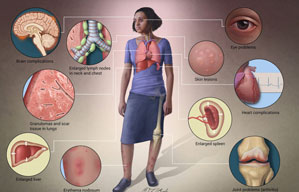
Sarcoidosis is a disease in which inflammation produces tiny lumps of cells in organs throughout the body. — most commonly the lungs and lymph nodes. But it can also affect the eyes, skin, heart and other organs
he cause of sarcoidosis is unknown, but experts think it results from the body's immune system responding to an unknown substance. Some research suggests that infectious agents, chemicals, dust and a potential abnormal reaction to the body's own proteins (self-proteins) could be responsible for the formation of granulomas in people who are genetically predisposed.
There is no cure for sarcoidosis, but most people do very well with no treatment or only modest treatment. In some cases, sarcoidosis goes away on its own. However, sarcoidosis may last for years and may cause organ damage.Signs and symptoms of sarcoidosis vary depending on which organs are affected. Sarcoidosis sometimes develops gradually and produces symptoms that last for years. Other times, symptoms appear suddenly and then disappear just as quickly. Many people with sarcoidosis have no symptoms, so the disease may be discovered only when a chest X-ray is done for another reason.